
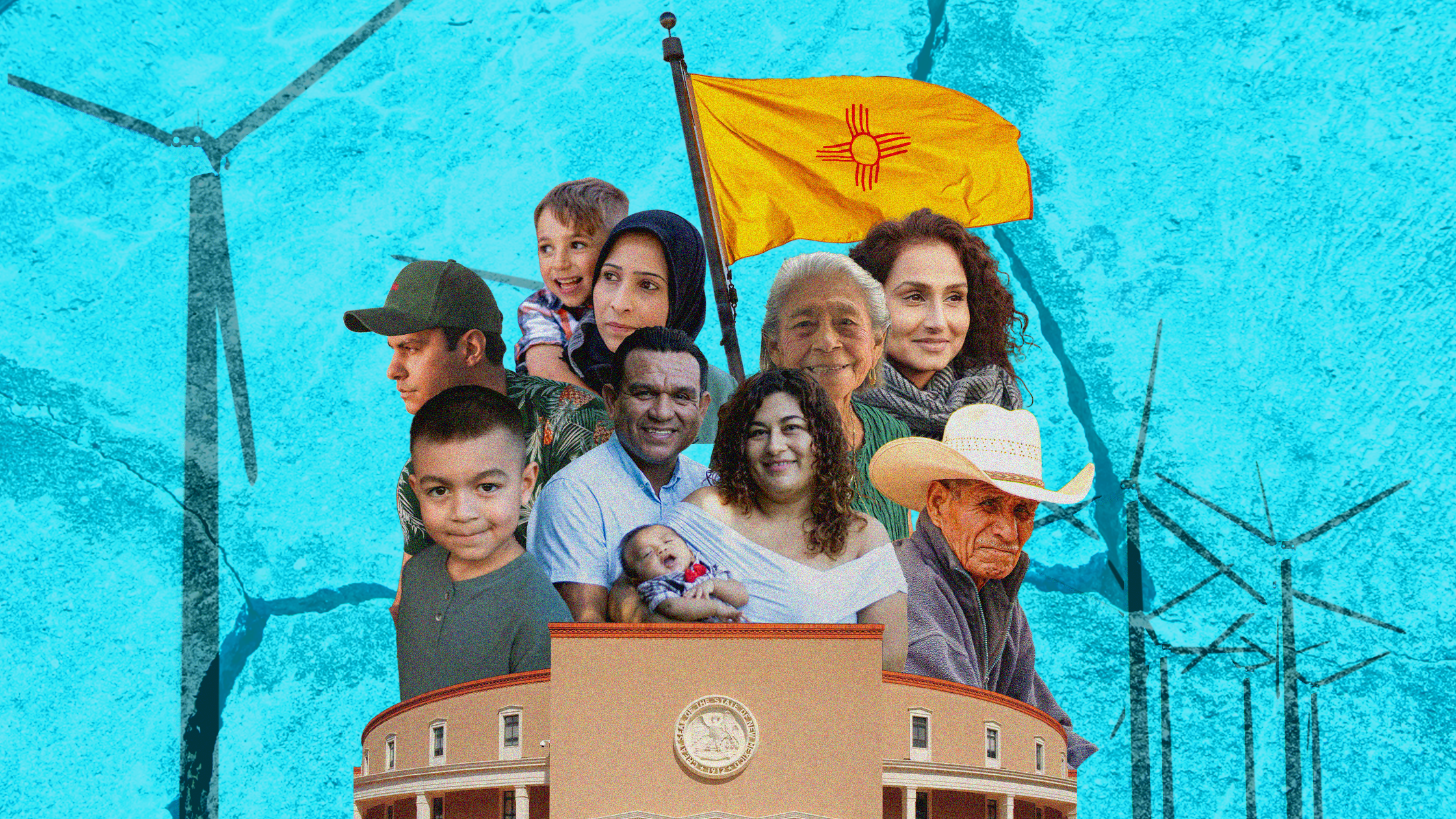

The 2026 legislative session has gaveled to a close. It was a season of significant victories for New Mexico families, punctuated by moments of stark obstruction that exposed a clear divide: some leaders are fighting for our families and our future, while others are fighting to protect polluters, powerful corporations, and a broken status quo.
The Good: Landmark Victories That Protect Our Communities
This session showed that when our leaders focus on real solutions rooted in New Mexican values—family, community, and fairness—they can make historic progress.
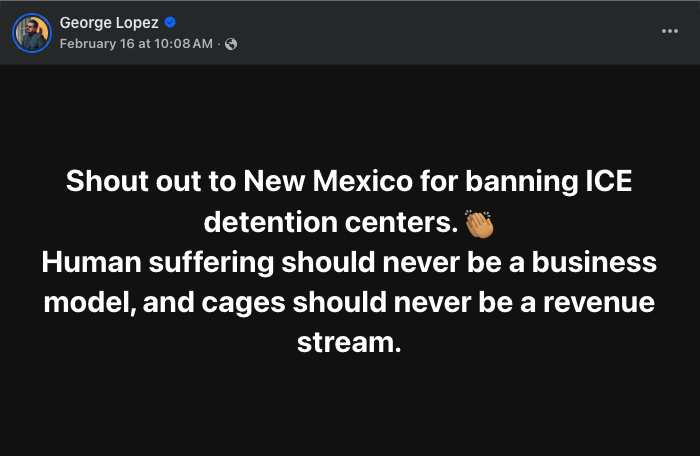
One of the session’s defining achievements was the passage and signing of HB 9, the Immigrant Safety Act. This act bans local governments from making new ICE detention contracts and terminates existing ones. That includes detention centers in Otero, Torrance, and Cibola County. ICE could still find a way to create new private prisons in NM, but this breaks a crucial link in their chain of human rights abuses. It also prohibits local law enforcement from functioning as an extension of federal immigration enforcement. It embodies our state’s commitment to safety and respect for all, declaring that we protect our neighbors by countering harm with humanity, not fear. HB 9’s influence was felt strongly across the nation — even George Lopez gave New Mexico a shout out for this monumental move.
We’re not only protecting our immigrant communities, we are also setting them up for success. HB 124, which permanently establishes the Office of New Americans at the Department of Workforce Solutions, also passed. This creates long-term infrastructure to coordinate workforce development for immigrant workers, addressing labor shortages and recognizing their essential role in New Mexico’s economy
SB 40, the Driver Privacy & Safety Act, also passed both chambers. This win protects New Mexican families by limiting the sharing of automated license plate reader data with federal agencies like Border Patrol for immigration raids. Your car’s data should belong to you, not spy on you. We’re glad our legislature stood up for privacy over surveillance.
In a bold move to protect reproductive privacy, lawmakers also passed SB 30, Reporting of Induced Abortions, a bill that repeals outdated abortion reporting requirements and dismantles a system that could be used to identify and target providers and patients. In healthcare, HB 4, the Healthcare Affordability Fund, will direct revenue from health insurance premiums to a state fund to address federal Medicaid cuts and protect families from premium spikes.
HJR 5, Legislative Compensation Modernization has also passed and is headed to the 2026 general election ballot. This constitutional amendment would pay legislators a salary benchmarked to the state’s median household income. It’s a crucial step to ensure public service isn’t only for the wealthy, making our government more representative of everyday New Mexicans.
The Bad: Obstruction That Cost Us Our Future
The session was also defined by procedural games and performative politics that killed critical, forward-looking legislation.
A major setback was the failure of SB 18, the Clear Horizons Act, on the Senate floor (23-19). This bill would have codified the state’s climate pollution reduction goals into law, providing long-term certainty for a clean energy economy. Its failure, after hours of performative debate, showed a clear choice: stand with a sustainable future or with polluters. Like Lucas Herndon, Policy Director at ProgressNow New Mexico said,“The Governor’s 2019 executive orders have helped reduce emissions, but executive action alone is not permanent. Without durable legislation, New Mexico remains vulnerable to political shifts and escalating climate costs.”
The most blatant example of obstruction was the fate of SB 235, the Microgrid Oversight Act. This clean energy bill was held “hostage” behind SB 17, the Stop Illegal Gun Trade Act, in the House Judiciary Committee. When SB 17 wasn’t brought up for a final vote, the Microgrid Act died with it. This bill would have protected New Mexican families by requiring large energy users—like corporate data centers—to meet clean energy standards, preventing them from passing the cost of their pollution onto everyone else’s power bills.
We saw the same old tricks of obstruction peaking during hearings like SB 30, the Reporting of Induced Abortions bill, which featured hours of what was dubbed “men legislating what they’ll never experience”—including Senator William Sharer claiming that he “could perform an abortion on a kitchen table”. This kind of theater diverted precious time from solving real problems like healthcare affordability and climate change.
The Work Continues
This session showed that when we lead with our values—respect, responsibility, and ensuring everyone has a seat at the table—we can win. The passage of the Immigrant Safety Act, Driver Privacy Act, Healthcare Affordability Fund, and Office of New Americans are testaments to that.
But it also laid bare the cost of obstruction—revealing a troubling allegiance to outdated industries and a willingness to let political games jeopardize our economic and environmental resilience.
The victories we celebrate are foundational, but the work they’ve left unfinished is urgent. As we look ahead, the challenge is clear: we must continue to demand that our leaders tackle New Mexico’s real problems with real solutions, not political theater. Our air, our health, and our shared future depend on it.