
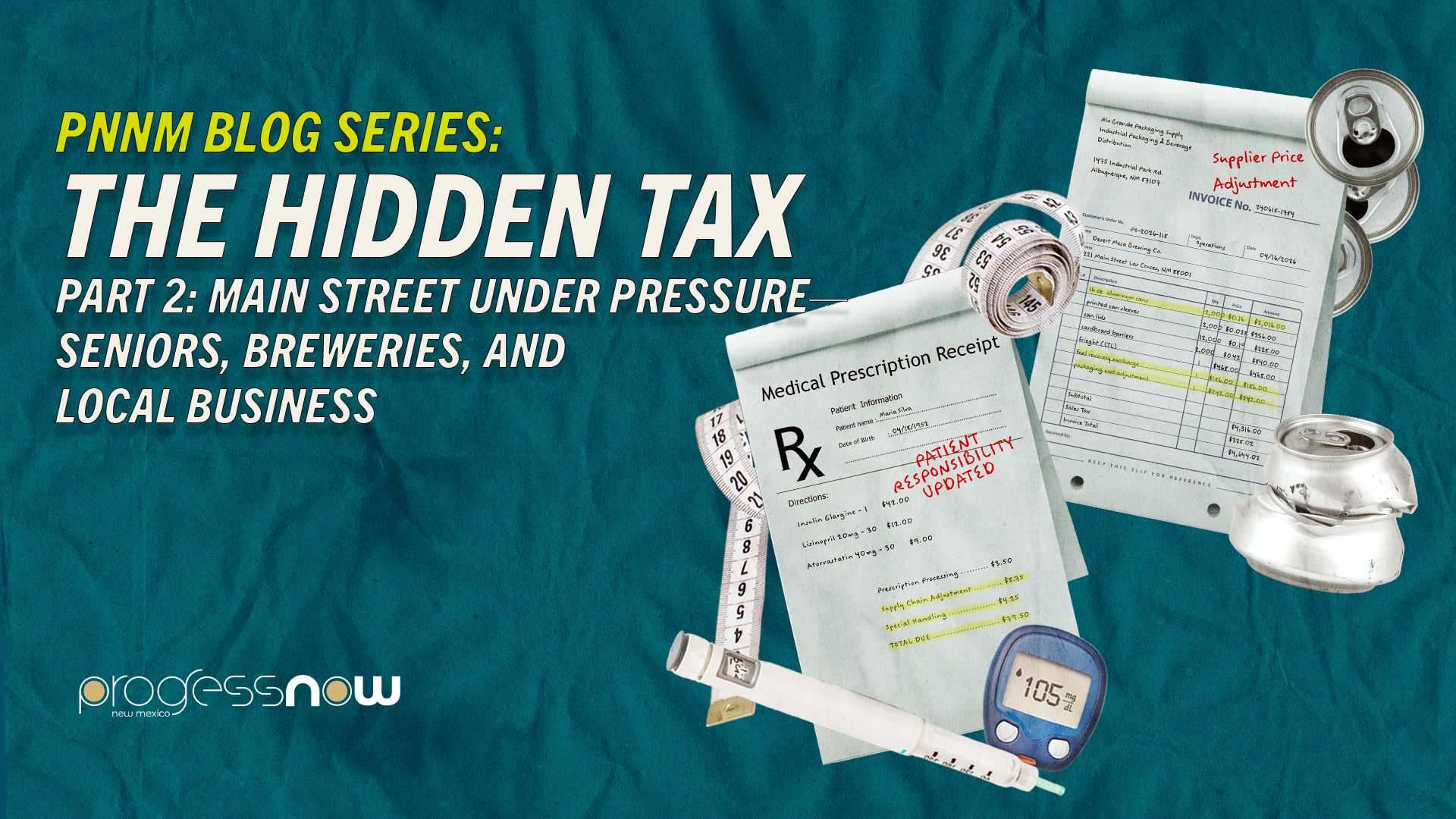

This is the second post in a five-part series on “The Hidden Tax: New Mexico’s Energy Crisis & Path Forward.” Read Part 1 on household budgets, Part 3 on oil money dependence, Part 4 on the energy transition, and Part 5 on infrastructure policy.
Have you ever had to cut your insulin dose in half to make it last longer? Have you ever delayed filling a prescription because even with insurance the copay is too high to fit this month’s budget? You’re not alone. Or do you own a business that has struggled recently due to shipping costs or the cost of materials you use going so high, you know you can’t pass it on to your customers and expect them to keep coming back? We get it, it’s happening right here in New Mexico more than you know.
These aren’t isolated struggles. They’re symptoms of a supply chain crisis that extends far beyond the gas pump, hitting New Mexico’s most vulnerable residents and iconic local businesses where it hurts most.
The Medication Rationing Crisis
New Mexico faces a perfect storm when it comes to pharmaceuticals and elderly care. The state has one of the oldest populations in the nation, with seniors representing a growing share of residents, and simultaneously struggles with some of the most challenging healthcare access issues in the country.
The numbers tell a devastating story:
- 57% of New Mexico adults report being somewhat or very worried about affording prescription drugs
- 32% rationed medication in the last year due to cost; skipping doses, cutting pills in half, or not filling prescriptions at all
- 64,460 seniors (age 60+) received SNAP benefits in fiscal year 2022, and that caseload is projected to grow by 81% by FY27
- 79% of respondents agree the U.S. healthcare system needs to change
When aluminum prices hit four-year highs and shipping costs surge from the Hormuz conflict, the pharmaceutical supply chain feels it immediately. Many medications require aluminum packaging, temperature-controlled shipping, and air freight for time-sensitive deliveries. Every part of that process is tied into the oil and gas markets, meaning every part of the process is now significantly more expensive.
Healthcare Access Challenges
New Mexico’s healthcare system is already difficult to navigate, with:
- Limited specialist access in rural counties
- Long wait times for appointments in Albuquerque and Santa Fe, even longer for people living outside of metro areas
- Transportation barriers for seniors who can no longer drive
- Provider shortages, particularly in primary care and geriatrics
The state has attempted to address this through the Food is Medicine Program, investing $4.7 million in state funds (supplemented by $16.7 million in federal funds, totaling over $21.5 million) to benefit pregnant women and older adults enrolled in community benefit programs.
But federal cuts threaten these gains. The Healthy Universal School Meals Act and NM Grown for Senior Meal Programs face uncertain futures as federal support evaporates. In FY25, the program served 4.2 million senior meals to 50,680 seniors. But no new funding was added for FY26. This is a good time to say out loud that the Republican Party controls the levers of power at the federal level, just in case we weren’t being clear.
The Air Freight Connection
Here’s where the oil crisis hits home: 18% of air cargo has already been disrupted by the Hormuz conflict. For New Mexico seniors relying on specialty medications, many of which must be shipped via air freight from manufacturers in India, Europe, or the East Coast, this means:
- Higher shipping costs passed on to consumers and Medicare recipients
- Delivery delays for time-sensitive medications like osteoporosis, insulin, and oral contraception
- Potential shortages of critical drugs like fever reducing antibiotics, and even stroke prevention medicines or cancer drugs
- Increased insurance premiums as pharmaceutical companies hedge against supply chain risks
When jet fuel prices have doubled since the conflict began, and airlines are adding refueling stops to avoid the Gulf region, every prescription that travels by air becomes more expensive. For seniors already rationing insulin or blood pressure medications, even a $10 monthly increase can mean the difference between adherence and dangerous gaps in treatment.
The Brewery Crisis
New Mexico’s craft brewery scene has been an economic bright spot for at least a generation but it’s now facing the same perfect storm hitting breweries nationwide, with unique local challenges.
The State of New Mexico Brewing:
- 104 craft breweries operated in New Mexico in 2022, ranking the state 10th highest in the nation for most breweries per capita
- The industry generates approximately $265 million in economic impact annually
- Breweries employ thousands of workers across the state, from Albuquerque to Santa Fe to smaller communities like Española and Portales
- The sector has spurred revitalization in industrial areas near downtown Albuquerque and other urban centers
The Aluminum Dependency
Here’s the vulnerability: 78% of packaged craft beer volume nationally is now sold in aluminum cans (up from 76% in 2024). For New Mexico breweries distributing beyond their taprooms, which most must do to survive in our relatively small market, this creates significant exposure to aluminum price volatility.
The Cost Impact:
- Aluminum can prices have climbed 26% since 2020
- A 25% tariff on aluminum is projected to increase brewery costs by 5%-10%, equating to $0.01–$0.025 per can
- For a brewery producing 1,000 barrels annually (about 7,750 gallons or roughly 82,500 cans), that’s an additional $825–$2,062 per year in packaging costs alone
Real-World Consequences:
The stress is already showing. Bosque Brewing, one of New Mexico’s most recognizable craft breweries, filed for Chapter 11 bankruptcy protection in late 2025 amid mounting financial challenges. While multiple factors contributed, industry observers cite rising input costs including packaging, ingredients, and transportation as significant pressures.
The Competitive Disadvantage
New Mexico breweries face particular challenges:
- Smaller production volumes mean less negotiating power with can suppliers compared to national brands
- Distance from major markets increases transportation costs for both incoming materials and outgoing product
- Limited local canning infrastructure forces reliance on suppliers in Texas, Colorado, or California
- Tourism-dependent taprooms face reduced visitor spending when gas prices make day trips to Albuquerque or Santa Fe less affordable
As one industry analyst noted: “Neighborhood taprooms are hosting everything from trivia nights to music bingo as they work to become ‘third spaces’ where people can gather beyond home and work, helping them weather industry challenges better than larger competitors.” But even taprooms can’t escape the packaging cost crisis for their to-go sales.
The Ripple Effect
When breweries struggle, the impact spreads:
- Local barley and hop farmers lose institutional buyers
- Tourism economies in areas like Santa Fe’s Railyard District or Albuquerque’s Brewery District see reduced foot traffic, even less for breweries outside of urban areas
- Food truck operators who cluster around breweries lose revenue
- State tax revenues decline from both brewery operations and tourism
- Cultural identity Loss New Mexico’s brewing scene has become part of the state’s modern identity, with award-winning IPAs, green chile-infused lagers, and native-hops brews drawing national attention
The Bipartisan Consensus
One glimmer of hope: New Mexicans across party lines agree on solutions. 93-94% of respondents including 97% of Republicans, 94% of Democrats, and 94% of unaffiliated voters support policies like:
- Capping out-of-pocket costs for life-saving medications like insulin
- Authorizing the Attorney General to prevent price gouging
- Establishing a Prescription Drug Affordability Board
- Prohibiting drug companies from charging more in the U.S. than abroad
This consensus matters because it shows that when energy crises expose healthcare vulnerabilities, New Mexicans unite around protecting their most vulnerable neighbors.
What’s Next in This Series
The crisis extends beyond households and local businesses. In Part 3, we’ll examine who actually benefits from New Mexico’s oil wealth (spoiler: it’s not most New Mexicans). In Part 4, we’ll dive into the state’s Energy Transition Act and the paradox of funding a post-oil future with oil money. And in Part 5, we’ll look at why gas tax holidays are a dangerous fix that makes the problem worse.
What You Can Do
- Support local breweries: Buy from NM craft breweries directly when possible to help them weather input cost increases
- Advocate for prescription drug reform: Contact your representatives about capping out-of-pocket medication costs
- Check on seniors in your community: Many are rationing medication in silence. Connect them with assistance programs wherever you can find them!
- Share your story: Tell policymakers how supply chain disruptions are affecting you, your business or family
Bottom Line: The energy crisis isn’t just about gas prices. It’s hard to understate the true web that oil and gas weaves in our modern world, from the tangible products reliant on petroleum manufacturing to the global transportation required for every part of every product we’re used to having access to. It’s about whether seniors can afford their medication and whether local breweries can survive long enough to employ workers and anchor tourism districts. For New Mexico, protecting vulnerable populations and small businesses requires more than waiting for global markets to stabilize. It demands state-level policies that shield residents from supply chain shocks and invest in local economic resilience.