
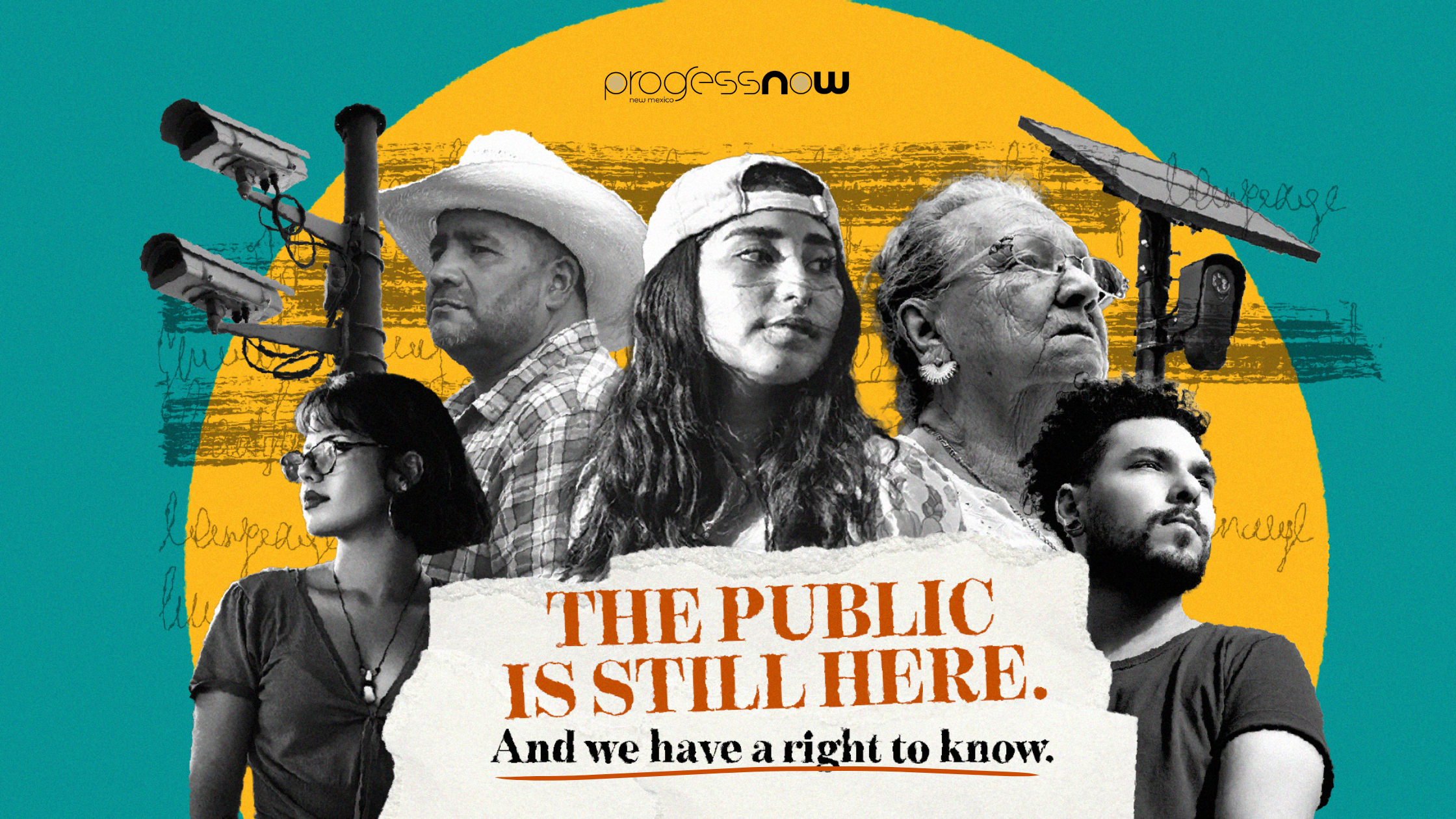

If you’re a newshound, policy wonk, or even just a casual observer who occasionally tunes into what local governments are up to on your social media feed or news apps, you probably hear the term “government transparency” a lot.
In an age when somehow every facet of our lives seems to be more and more public, how is it then that we also seem to have less and less access to what “the government” is actually doing? We don’t think it’s a coincidence—and a lot of the work we’ve been doing lately can be tied back to that same (sometimes trite feeling) soundbite.
It all started back in Rome… ok, just kidding (kinda). But it does have to do with this thing we call “democracy.” The concept of a government made up by and in the best interest of we, the people, does date back to ancient times, and so we have a lot of history to draw from. But let’s just skip ahead to what’s been happening lately.
Fundamentally, our system of government in the US operates in such a way that all decisions are publicly vetted. From the elections that install our representatives at all branches of government, to the way the government conducts its business, those mechanisms are designed to be open, accessible, and at our behest. And unless it’s some X-Files-level secret, the government’s records are also supposed to be open and accessible.
That’s exactly what we pointed to in our recent letter to the Inspection of Public Records Act (IPRA) Task Force: When the government operates in the open, it strengthens the trust between neighbors and the institutions that serve them.
As our Executive Director noted in a Santa Fe New Mexican op/ed:
From Albuquerque to Santa Fe and Farmington to Las Cruces, communities across New Mexico are feeling the same strain: Roads that require work, schools that require resources, and city halls making consequential decisions with our tax dollars. What every one of these communities has in common is a basic need to know what their government is doing.
Not to put too fine a point on it, this is what meeting minutes are all about. If you’ve ever been to a city council meeting or something like that, you’ve probably seen that body pass a motion to “accept the minutes” from the previous meeting—which is a formal acknowledgement that the body reviewed what was recorded from their last meeting and approved what was included.
These “minutes” – which are required by our state’s Open Meetings Act – are important documents for folks like us who try to keep up with local and state politics, because sometimes you hear about a city councilor, county commissioner, or state representative who said something absolutely out-of-pocket, and having a record of it is how we hold those people accountable. It’s easy to forget these systems were put in place long before everything was recorded or livestreamed—but they remain just as important today.
One of the reasons things feel more secretive than in the past is the rise of privatization. Let’s take a look at a few big examples most New Mexicans are familiar with.
Sign up for our email newsletter to get the latest blogs, news, and policy updates from ProgressNow NM
Public Safety
The idea that Flock cameras (plus Axon, Genetec or similar technology) and other video surveillance equipment operate under the guise of “public safety” is especially problematic. One big reason is that the hardware is not owned by the government entities that use them, as we noted in a recent blog on the surveillance-for-profit economy
The data collected from these private cameras is often accessible to the state for its stated purpose –whether that’s policing, traffic studies, or whatever – but as we’ve seen from public records of the contracts, the companies who collect the data “own” it or in some cases simply have full and irrevocable access for years on end, which takes it out of reach of public scrutiny. That access can include using content to train new models (products) and to find surprising and troubling new uses cases for AI technology in our local public schools, as a local surveillance tech vendor casually mentioned a couple of weeks ago.
In other words, private companies are being paid by public dollars and using public resources (land, air, water, roadways, our children’s early learning years, etc) but somehow are not responsible to the public.
There are lots of reasons to be wary of the digital over-policing that has swept our world in the last few decades, but the blurred lines of public-private partnerships that remove the public’s ability to analyze and hold anyone accountable for the misuse of these technologies is among the highest concerns for those of us who care about democracy.
On the other end of the spectrum, body-worn cameras on police and other armed agents of the state are an example of how publicly accessible records can keep the government in check.
There’s little evidence that body-worn cameras reduce police violence –especially as New Mexico continues to be one of the deadliest states when it comes to cops killing civilians, despite record numbers of body-worn cameras –but the point remains:
You can file an IPRA request for a cop’s bodycam footage if you want to know what was happening from their perspective as an agent of the state. You can’t IPRA what Flock is doing with all that footage nor the activities of other agencies or partners they share it with.
Private Equity
We’ve done some deep dives into private equity lately, covering everything from our healthcare systems to our major utilities. Many of us grew up in a time when there were still “county” hospitals or clinics in our communities.
In Las Cruces, Memorial Medical Center was such a facility for years. It has since become owned by Apollo Global Management, a PE company, and is managed by Lifepoint Health, which is based in Tennessee. In recent months and years, there have been a series of allegations including reports of cancer patients being denied services, poor quality of care, and other issues. In the old days, citizens would have had some real opportunity for recourse by going to the local government and demanding that the public entity be held accountable; the information about the “business” of that hospital would all have been available.
Now, like so many things in our lives, that information is much less accessible and requires legal action –through tort law and years of litigation –and even then, we know from experience that these large corporations often settle out of court to keep the actual facts from ever being made public. These issues affect the quality of care we all receive, how doctors, nurses, and other staff are treated, and the cost and affordability of healthcare for whole communities.
Private Business and Democracy
In the sixteen years since the infamous Citizens United decision opened the floodgates of private “dark” money into our political system—well, gestures broadly—a lot has happened. And while private industry has always had an outsized influence on American politics, much of the 20th century was characterized by efforts to quell such influence.
Here in New Mexico, if you give money to a candidate you support, your name will appear on that candidate’s donor records filed with the Secretary of State. But if you were, say, the CEO of a large multinational technology company and gave a billion dollars to a privately run Political Action Committee, that donation doesn’t have to be disclosed in the same way.
And even still, once that PAC has the money, it’s often passed through several other PACs before it reaches local candidates in races like New Mexico’s. It’s not hard to imagine a scenario where a candidate whose local race may have historically only raised a few thousand dollars in individual donations suddenly gets a real boost from a large donation from a PAC. If that candidate wins, it’s also not hard to imagine someone from that PAC reaching out to congratulate them “on behalf of certain interests who are very invested in your legislative priorities…”
We’re not saying Chevron is directly controlling the state’s elected officials, but we’re also not NOT saying that Chevron has been the largest single contributor to political committees in New Mexico for years (this example from 2024 is just one of many)—and that New Mexico hasn’t had a major update to our Oil and Gas Act since the early 1970s.
A different form of blurring between public and private interests comes from New Mexico’s “revolving door” of political appointees who cross into the private sector before and/or after their public “service.” And to be clear, this isn’t a partisan problem,it happens on both sides of the political spectrum.
Famously, a number of former Governor Susanna Martinez’s appointees came from and returned to the oil and gas industry. Ryan Flynn might be one of the clearest examples. Flynn was a lawyer who worked for an “energy company” and was then appointed Secretary of the New Mexico Environment Department.
After his tenure with the state, Flynn went on to become president of the New Mexico Oil and Gas Association. And to really drive home the point we’re trying to make, here’s an excerpt from a 2017 speech he made to NMOGA’s membership shortly after this transition:
Susan[a] Martinez, my former boss, she’s embraced an all of the above approach to energy policy. Probably the most consistent benefit to our industry over the last 7 years is that we don’t have to worry when we walk into each legislative session about a harmful piece of legislation getting signed into law. The governor has served as a backstop to prevent harmful legislation from being passed that would make extremely difficult challenges for our industry.
So yeah, there it is in black and white: an oil executive stating that his industry doesn’t have anything to worry about from the current administration, leveraging his personal relationship as an unspoken guarantee, and promising throughout the speech to lead NMOGA in becoming “the most powerful organization in the state.” On multiple occasions.
But again, this isn’t a partisan issue. Former Secretary of Economic Development Alicia Keyes, appointed by current Democratic Governor Michelle Lujan Grisham, has since left that post and founded a private firm called Apaluma. And this is a great example to end on, because Apaluma is self identified as a company that allows customers to access “decades of permits, filings, and monitoring feeds” in one searchable database—ostensibly a private company leveraging publicly available information on a for profit AI platform that in some cases is even sold back to the very agency they gained records from.
We’ve dived into some of these issues more directly in the past few weeks and months, but it’s important to occasionally step back and look at the larger context. Our system of government is, by design, supposed to be by, of, and for the people. But when the lines between government and private industry increasingly blur, our collective power to hold people accountable is weakened.
What’s in our best interest versus what’s in the best interest of private shareholders is often in direct opposition, and without the collective bargaining power of the state to safeguard our interests—where do we turn next?